










NWFS Ask a Ranger at Mt. Bachelor
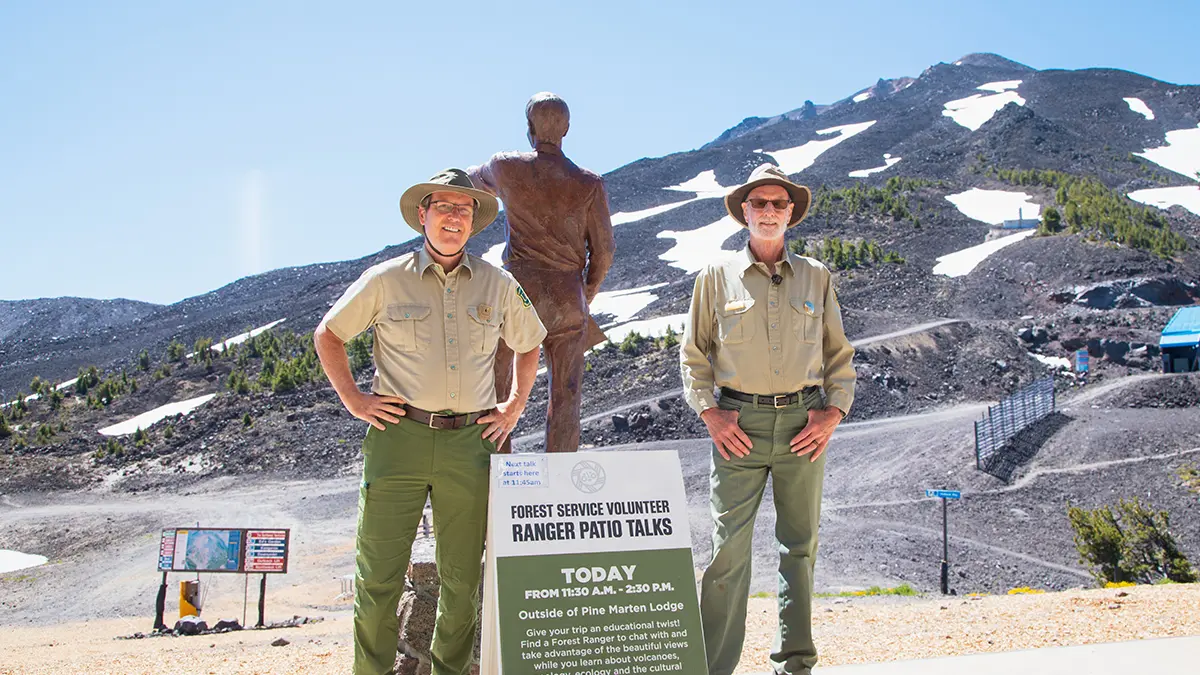
Meet Ed. Ed is a volunteer for Discover Your Forest, the non-profit organization that partners with the Forest Service to put on various activations at Mt. Bachelor such as Snowshoe Tours, Ski with a Ranger, Junior Ranger Programs, and their summer series, “Ask a Ranger” Interpretive Ranger Talks". Through these programs, the volunteer rangers work to educate anyone interested on the history of Mt. Bachelor, the Deschutes National Forest, the volcanic activity and geology of the area, local animals, snowfall and snowmelt, and so much more. These highly educated and passionate outdoor enthusiasts love sharing their knowledge of the local landscape and will entertain a crowd of any size. All of their talks last between just 30 minutes (“Ask a Ranger”) to 90 minutes (Snowshoe) and are FREE!


Here are some of the highlights from a tour last summer!


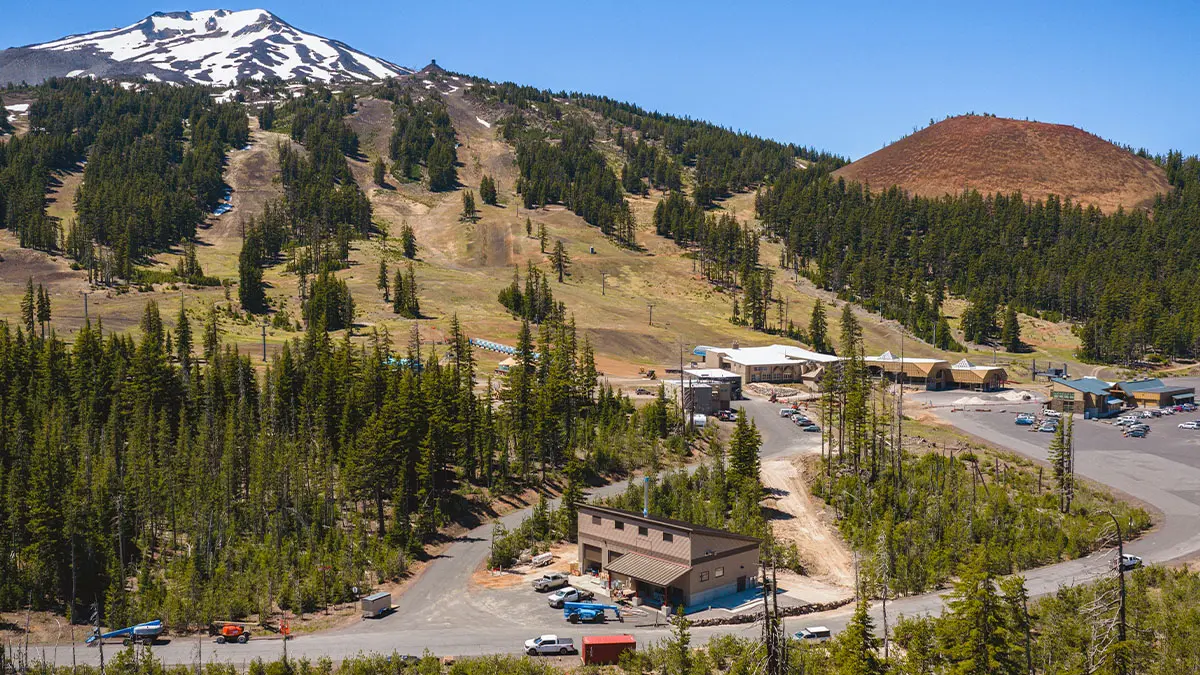
The tour started out in front of Pine Marten Lodge next to the statue of Mt. Bachelor’s founder, Bill Healy. Here, Ed talked us through the history of Mt. Bachelor the ski area, but also its history as a volcano. Technically two volcanos in one, a Stratovolcano on top of a Shield Volcano, Mt. Bachelor shockingly stopped forming only 7,800 years ago. A long time in human terms, but as Ed put it, “a pretty short amount of time for rocks.” Although there has not been any volcanic activity in 7,800 years, scientists aren’t quite ready to say that further volcanic activity is not a possibility, thus classifying Mt. Bachelor as a dormant volcano, not extinct.
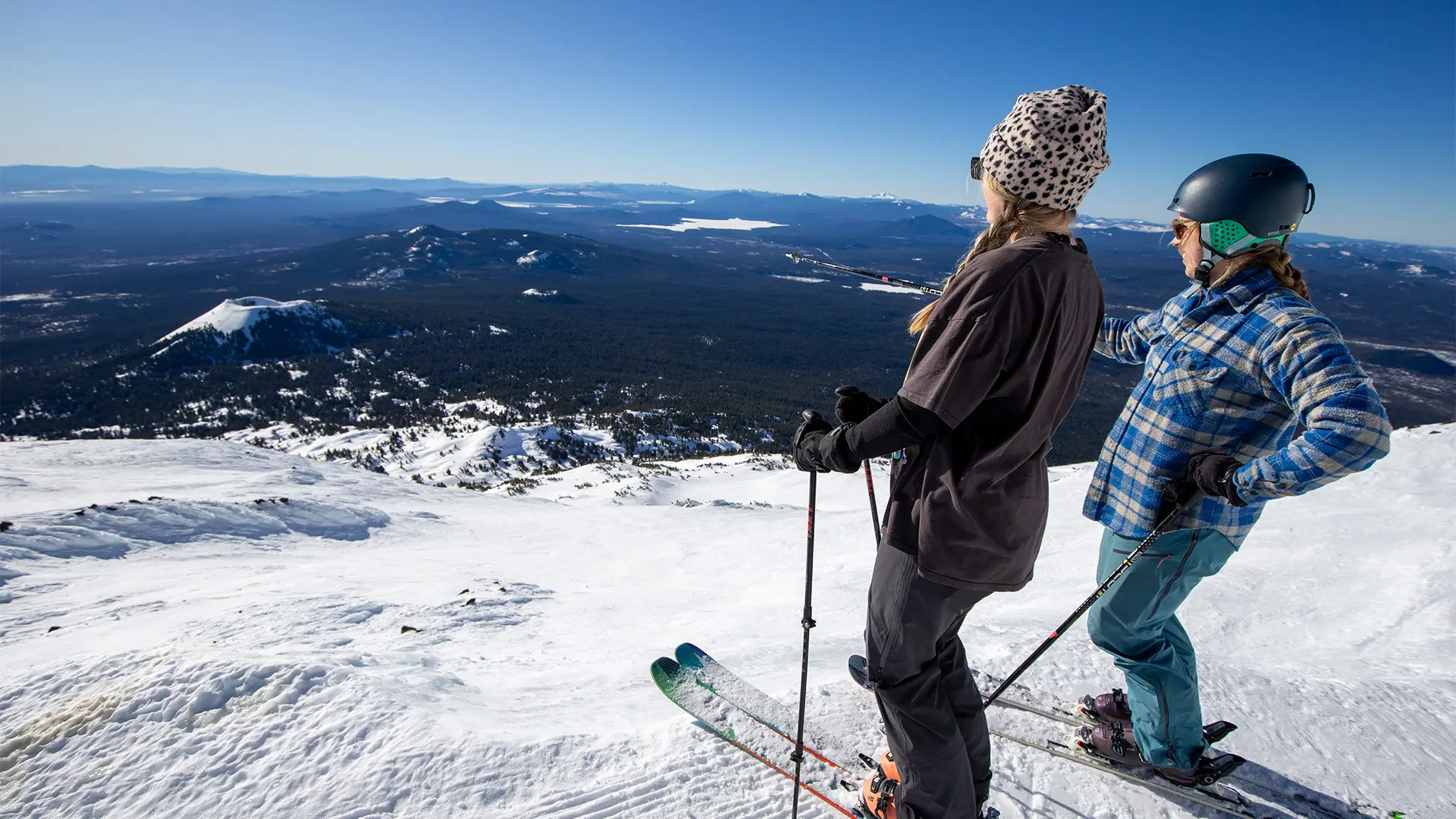
Ed then led us up the outside stairs of the Pine Marten Lodge to the second-floor deck. From there we had an incredible view of the Three Sisters, Broken Top Mountain, and the great expanse of the Deschutes National Forest. Quite the classroom backdrop! Looking out over the Cascades, we learned about each of the Sisters – South, Middle, and North (also named Faith, Hope, and Charity) and their neighbor, Broken Top, which all sit on the North American and Juan de Fuca tectonic plates. Ed gave us some cool facts about South Sister—it is the 3rd tallest mountain in the state of Oregon and the tallest in the Central Oregon Cascades, standing at an impressive 10,358’. What is even crazier about the biggest of the Sisters is that South Sister is actually growing by about an inch per year! Unlike Bachelor, it is considered an “active” volcano, although there is little threat of an eruption.


Next, we talked about lakes. As you might be familiar, Mt. Bachelor sits on Cascade Lakes Highway, one of the most stunning highways in the United States. From our lookout, we could see a few of the lakes that help give Cascade Lakes Highway its name. Like the confident captain he is, Ed stood at the railing of the deck pointing out each lake and what made it special. He then asked a puzzling question, “Where does a snowflake go after it melts off the slopes of Mt. Bachelor, and how long does it take to get there?” We won’t steal all of Ed’s thunder, but the answer was surprising. Hint, the lake the water ends up in has a small resort and it takes longer than you might think! From there, the water then travels south and eventually ends up in Little Lava Lake, the start of one of the most well-known rivers in the state.
We concluded the talk by exploring the different trees and wildlife that are present in the Deschutes National Forest and on Mt. Bachelor. All and all, it was a great time and an amazing crash course on the area we play in every day. Whether you’re a local or from out of town, half an hour with Ed and his fellow volunteer friends will be the highlight of your day.
The “Ask a Ranger” Interruptive Ranger Talks are Friday through Monday all summer with tours from 11:45 a.m. to 12:15 p.m. and 1:30 p.m. to 2:00 p.m. Check our website for more information on those, and all of the Discover Your Forest and Forest Service offerings up here at Mt. Bachelor.